Online route planning guide
MapQuest Driving Directions: Plan Fast, Reliable Routes Online
MapQuest Driving Directions can help you prepare for a commute, road trip, business visit, or everyday errand. Learn how to enter locations accurately, compare route options, and use online maps for driving, walking, and cycling journeys.
Independent resource · Always verify local conditions before travel
How to use MapQuest Driving Directions
A good route begins with clear location details. Whether you are looking for directions from home to work or planning a long-distance drive, the process is simple: enter where you are starting, enter where you are going, choose the best travel mode, and review the suggested route before setting out.

Use a full street address, business name, landmark, or recognizable place. Adding the city and state helps distinguish locations with similar names and reduces the chance of starting from the wrong place.
Enter the destination as precisely as possible. For a large campus, airport, shopping center, or venue, choose the correct entrance or nearby address when the exact arrival point matters.
Select driving for a car trip, walking for a pedestrian journey, or cycling for a bicycle route. Each mode can produce different streets, distances, and estimated travel times.
Check the route line, distance, estimated time, and any available alternatives. Look for the correct city and destination name so you do not begin a trip with an incorrect result.
How to get more accurate driving directions
The quality of a route depends on the quality of the location information and the decisions you make after the route appears. Use these practical steps to make online driving directions more useful:
- Use complete addresses. Include a street number, street name, city, state, and ZIP code whenever you have them.
- Check the destination pin. A business can have multiple entrances, and a nearby address may be better for the final approach.
- Compare distance and time. The shortest route is not always the quickest or easiest route, especially during busy travel periods.
- Plan for real-world conditions. Allow time for traffic, weather, construction, parking, rest stops, and unfamiliar roads.
- Add stops deliberately. If your trip includes fuel, food, a pickup, or a meeting, plan the stop before you begin rather than making a last-second detour.
- Recheck long trips. Review a long route shortly before departure because road conditions and travel times can change.
Driving, walking, and cycling directions
MapQuest Driving Directions is often used for car trips, but different travel modes are useful for different goals. Choosing the correct mode helps a route planner prioritize roads and paths that fit the way you intend to travel.
Driving directions
Use driving directions for commutes, errands, appointments, road trips, and deliveries. Confirm your starting point, destination, and preferred arrival location before leaving.
Walking directions
Walking routes are helpful for campuses, downtown areas, transit connections, and short local trips. Allow extra time and follow signs, crossings, and local pedestrian rules.
Cycling directions
Cycling routes can support daily rides and recreational trips. Check the route for terrain, bike access, road conditions, and safety before starting.
Understanding your route results
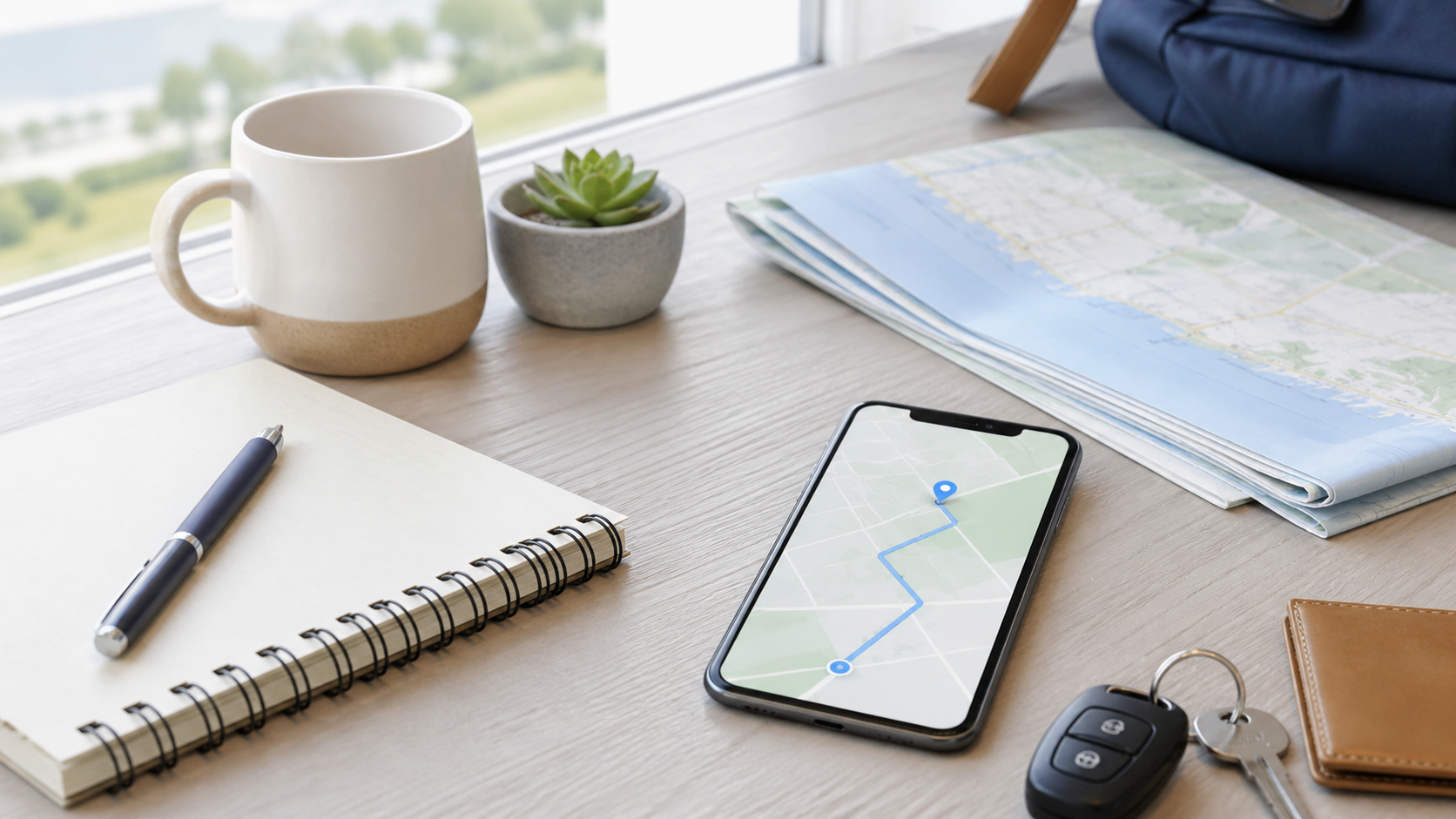
Route results are most useful when you treat them as a planning aid rather than a guarantee. The map gives you a visual overview, while the route summary helps you estimate how far and how long the journey may be.
Distance
Use total distance to estimate fuel, battery, walking effort, or cycling time.
Estimated time
Use the estimate as a baseline and add a buffer for traffic, stops, and parking.
Map view
Scan the complete route to recognize major roads, turns, and the final approach.
A simple checklist for better route planning
Before you start your trip, use this quick checklist to turn a route search into a practical travel plan:
- Confirm the starting location and destination.
- Choose driving, walking, or cycling based on your actual trip.
- Review the route on the map and note the major turns.
- Allow extra time for traffic, weather, stops, and parking.
- Keep a safe way to access directions without handling your phone while driving.
- Follow posted signs and local traffic laws if they differ from the suggested route.
Safety reminder
Set up your route before moving. If you need to change the destination or review directions, pull over safely or ask a passenger to help.
MapQuest Driving Directions FAQs
What are MapQuest Driving Directions?
MapQuest Driving Directions are online route-planning directions that help you compare a starting point and destination, review a route on a map, and prepare for a drive. This website provides an independent route-planning experience and is not affiliated with MapQuest, Inc.
How do I get accurate driving directions online?
Enter complete starting and destination addresses, including the city, state, or ZIP code when available. Review the route, distance, estimated travel time, and any available route options before you leave.
Can I plan walking and cycling routes?
Yes. A route planner can help you compare driving, walking, and cycling options. Choose the travel mode that matches your trip, then review the route for practical details such as distance, road access, sidewalks, bike paths, and local conditions.
What should I check before following a route?
Confirm that the starting point and destination are correct, check the route summary, allow extra time for traffic or stops, and review local road conditions. Never enter or read directions while driving.