Independent MapQuest feature guide
MapQuest Turn By Navigation: Prepare for Each Turn
MapQuest Turn By Navigation is the requested search phrase for travelers looking for step-by-step guidance while moving through a route. The more common description is turn-by-turn navigation: a sequence of road changes, distances, and arrival decisions that helps a driver follow a planned trip. This independent guide explains how to prepare the route, use voice or visual prompts responsibly, recover from a missed turn, and keep a backup when coverage or device power is uncertain. Third-party interfaces and capabilities can change, so confirm current options in the official service and never operate a phone while driving. Review the MapQuest Turn By Navigation details before you choose a route.

- Prepare first
- Correct endpoints, travel mode, route, and destination entrance
- During travel
- Use voice prompts, safe glances, and legal stopping places
- If plans change
- Pull over before editing, rerouting, or reading details
- Backup
- Keep a route summary, charger, and local road awareness
What turn-by-turn navigation is meant to do
Turn-by-turn guidance reduces the mental work of remembering a route by presenting the next meaningful road decision. It can help a driver know when to leave a highway, which lane or ramp matters, and how far remains before the next change. The prompts are most useful when they support a route that you already checked. If the destination is wrong, the mode is wrong, or the pin is on an employee entrance, precise instructions can lead you confidently to an inconvenient place. For background, read Turn By Navigation on Wikipedia when you need context beyond this planning guide.
Start with the whole route, not the first instruction. Confirm the origin, destination, major corridor, estimated time, and arrival point before enabling guidance. Look for difficult interchanges, toll roads, ferries, border crossings, mountain segments, and long stretches without services. A short pre-trip review gives the driver context for the prompts and makes an unexpected instruction easier to question safely.
Set up MapQuest Turn By Navigation before departure
Enter complete locations and choose the travel mode that matches the vehicle. A passenger car, bicycle, pedestrian, and commercial vehicle may need different assumptions. If a business or venue has multiple entrances, use the public destination that matches the visit. Check the first turn from the actual parking spot or driveway, because a route beginning from the center of a property can produce a difficult or illegal exit. For broader route planning, visit MapQuest Driving Directions on the homepage after reviewing this MapQuest Turn By Navigation guide.
Review the route while stationary and decide how you will receive prompts. Voice guidance can reduce the need to look at a screen, but it does not replace signs, lane markings, or a visual understanding of the road. Mount the device where it does not block the view, connect power for a long trip, and set the volume before moving. If another person is navigating, agree that route changes will be made by the passenger or after the driver stops.
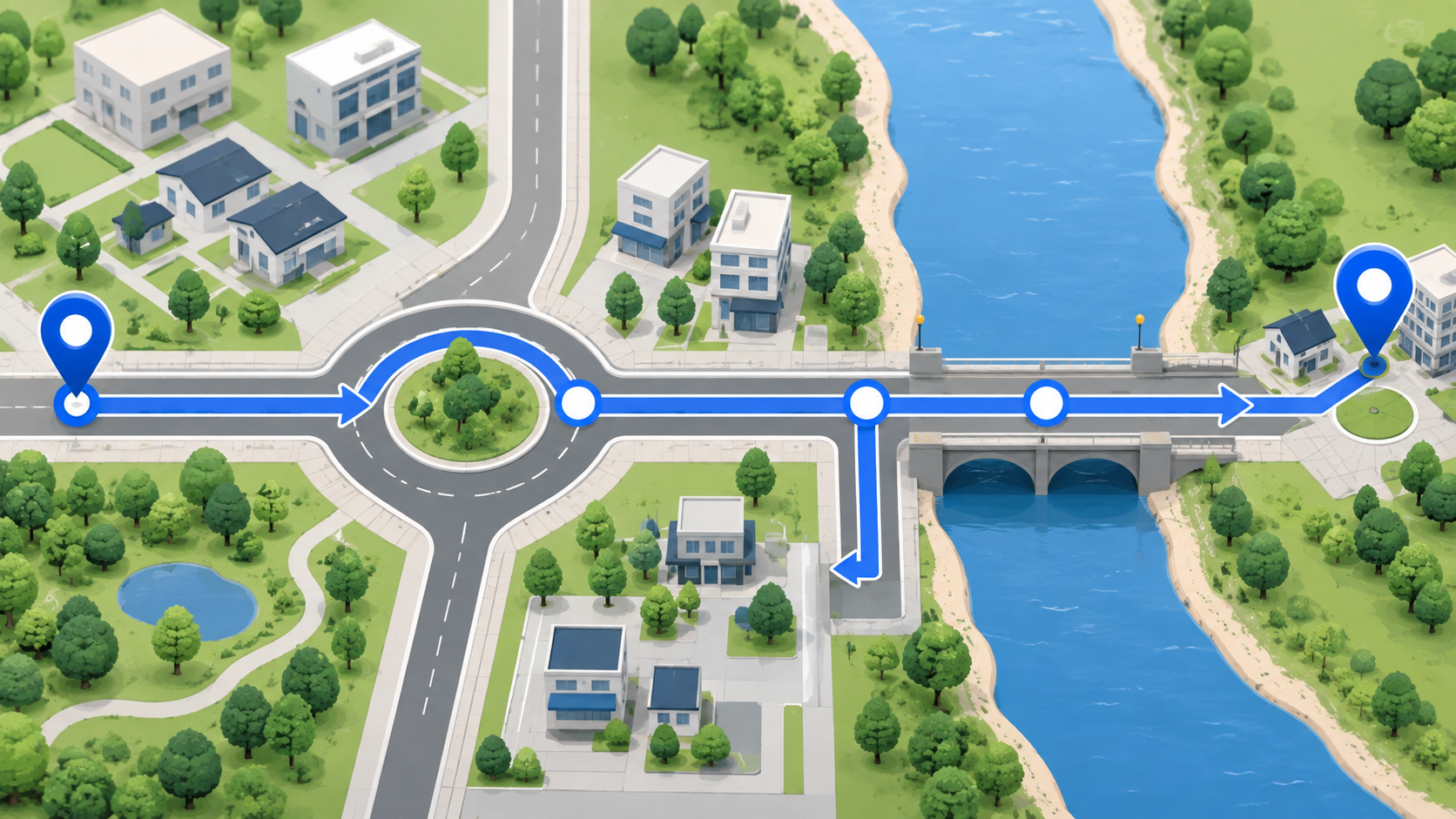
Read prompts as part of the road environment
A navigation instruction names a decision; it does not remove the need to identify the real road. Compare the prompt with lane arrows, signs, traffic signals, and the shape of the intersection. In a complex interchange, the turn may begin well before the ramp becomes visible. In a dense city, several streets can have similar names. Slow down within legal limits, keep a safe following distance, and choose the lane early when conditions permit.
Signals can arrive before the driver is ready to act. If the prompt seems early, unclear, or inconsistent with a posted restriction, continue safely or pull over and review it later. Do not make a sudden lane change, illegal turn, or stop in a live lane to satisfy an app. A missed turn is a recoverable planning problem; an unsafe maneuver is not. The service can recalculate after you reach a legal and safe position.
- Review the full corridor before relying on the next-turn prompt.
- Match prompts with posted signs, lane markings, and current restrictions.
- Let a passenger handle the screen or stop before changing the route.
- Treat a missed turn as a reason to recalculate safely, never to improvise abruptly.
Rerouting, weak coverage, and device limits
Rerouting can be helpful when a road closes or a driver misses a turn, but the new route may use unfamiliar streets or change the arrival assumptions. Pull over before evaluating the change and compare its road type, time, services, and destination approach. If the service offers an alternate route, choose deliberately rather than accepting every change automatically. For a long rural journey, note major junctions and communities before departure so the driver retains orientation if the connection fails.
Battery, signal, glare, heat, and audio interruptions can all affect a device. Carry a charger, save the destination address, and keep a simple written route summary for important legs. Downloading or saving information should follow the current official service’s rules and should be done before driving. A backup is most valuable when it is readable without requiring a phone held in the driver’s hand.
Safety rules for any navigation app
Directions are a support system, not a substitute for attentive driving. Never type, scroll, or read detailed instructions while the vehicle is moving. A passenger can monitor the route, or the driver can stop in a legal location before making an edit. Follow emergency responders, road crews, posted restrictions, and local traffic controls even when the digital route suggests another action.
Walking and cycling users need the same discipline in a different form. Pause before crossing a busy road, keep attention on traffic and other people, and do not let a screen override a closed path or unsafe shoulder. For every mode, share the plan when appropriate, allow extra time, and use common sense when the real environment differs from the map. A trustworthy route is one that leaves room for safe judgment.
How to use this MapQuest Turn By Navigation planning guide
- Enter exact origin, destination, vehicle mode, and the correct entrance or arrival zone.
- Review the full corridor, difficult interchanges, services, and route alternatives while parked.
- Set up voice prompts, a secure mount, power, and a passenger role before departure.
- Follow prompts together with signs, lane markings, signals, and current restrictions.
- If a turn is missed or the route changes, continue safely and stop before rerouting.
- Keep the destination address and a readable backup route for coverage or battery problems.
Questions about MapQuest Turn By Navigation
What does MapQuest Turn By Navigation mean?
It refers to a step-by-step navigation workflow, commonly described as turn-by-turn guidance. The route should be reviewed before travel and checked against signs, traffic controls, and current road conditions.
Can I edit a route while driving?
Do not type, scroll, or make detailed route changes while moving. Let a passenger handle the device or pull over legally before reviewing and changing the plan.
What should I do if the navigation instruction seems wrong?
Follow posted signs and safe traffic rules, avoid sudden maneuvers, and continue to a legal stopping place. Then verify the endpoints, route, and restrictions before rerouting.
Do I need a backup for turn-by-turn directions?
A saved address, route summary, charger, and knowledge of major junctions are sensible backups, especially on long trips or in areas with weak coverage. Prepare them before departure.